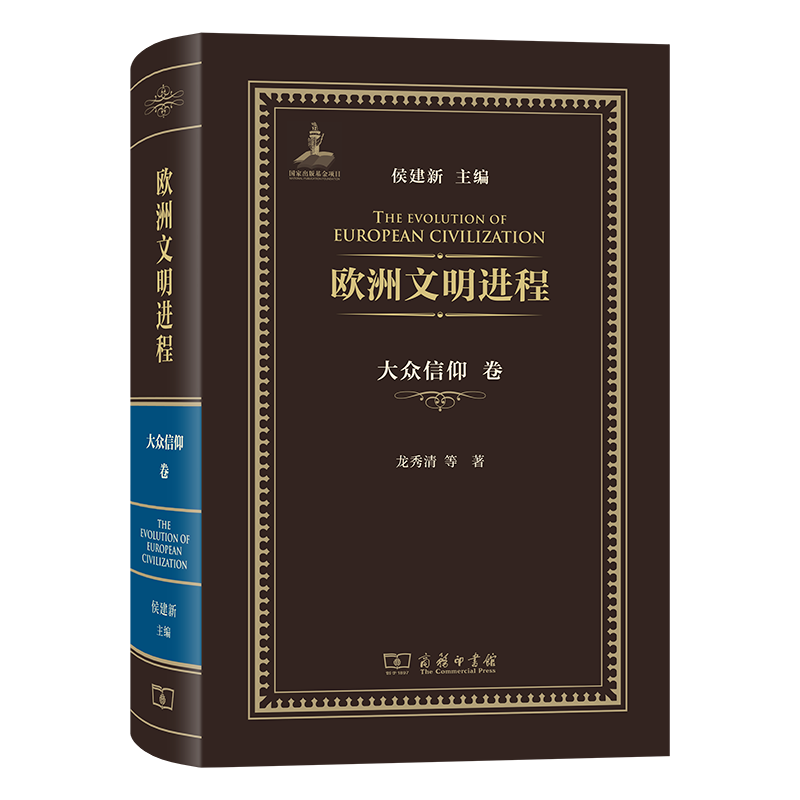
Editor: HOU Jianxin (Professor of IEC, TNU)
Author: LONG Xiuqing (School of History and Archives, Yunnan University)
Publisher: The Commercial Press, November 2025
Introduction:
Emerging in the 1950s, the social historiography research subverted the old view that Middle Ages was an "age of faith". Researchers put forward the new theory that existing studies only uncovered the beliefs of elites while ordinary people lived in "mass culture". They even argue that medieval Europe never achieved full Christianization, and a persistent divide and opposition existed between "elite religion" and "popular belief." The evolution of popular belief constitutes a vital component of the trajectory of European civilization.
Focusing on the evolution of European Christianization, this volume conducts an in-depth study of how common people accepted and understood orthodox Christian faith from the 5th to the 18th century. It traces the church's efforts and practices in pastoral enlightenment. It also explores various pious forms spontaneously formed by common people under the influence of pastoral enlightenment, such as the booming gilds, Quakers, mutual aid societies, secular monastic movements and other secular religious impulses. Furthermore, it truthfully indicates the transformation of popular faith in the early modern period. The author argues that during the medieval era, the Church did not merely suppress popular beliefs but instead regulated and accommodated it. While the church shaped the religious life of the masses, the masses also changed the feature of official faith through their conscious choices,which shows an interactive evolution between them.