Authors:Ali Almelhem , Murat Iyigun , Austin Kennedy , Jared Rubin
Abstract:
We trace the evolution of the language of science, religion, and political economy in the centuries leading to the British Industrial Revolution. Using textual analysis of 264,443 works printed in England between 1500 and 1900, we test whether British culture manifested a belief in progress associated with science and industry. Our analysis yields three main findings. First, there was a separation in the languages of science and religion beginning in the mid-eighteenth century. Second, volumes using language at the nexus of science and political economy became more progress-oriented during the Enlightenment. Third, volumes using industrial language—especially those at the science-political economy nexus—were more progress-oriented beginning in the eighteenth century.
Published on The Quarterly Journal of Economics, Volume 141, Issue 1, February 2026, Pages 263–314
Open access and free to download: https://doi.org/10.1093/qje/qjaf054
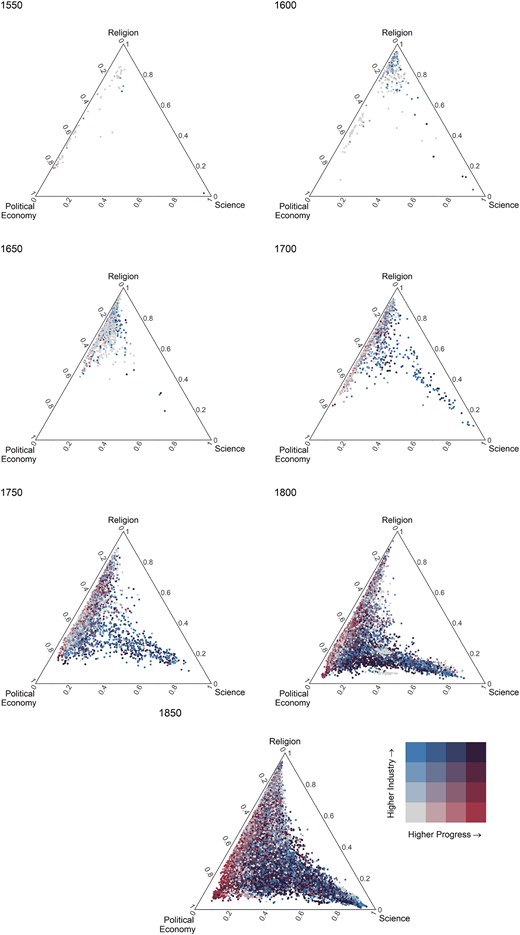
Figure X Progress and Industry Sentiment, 1550–1850
Each dot represents a volume. For each year, all volumes ± 10 years are included (i.e., for 1800 all volumes from 1790 to 1810 are included). The shade of each dot represents the sentiment of that volume along both the industry and progress axes.