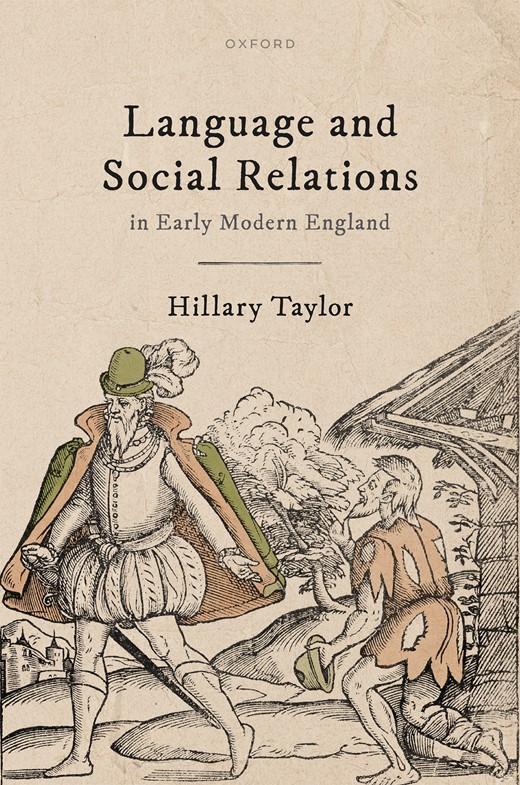
Author: Hillary Taylor
Published: Oxford University Press, March 2025
ISBN: 978-0198917663
Abstract:
This book examines the relationship between language, power, and socio-economic inequality in England, c.1550–1750. Early modern England was a hierarchical society that placed considerable emphasis on order and where language was bound up with the various structures of authority that made up the polity. Members of the labouring population were expected to accept their place, defer to their superiors, and refrain from ‘murmuring’ about a host of issues. While some early modern labouring people fulfilled these expectations, others did not; as a result of their defiance, the latter were more likely to make their way into the historical record, and historians have used the evidence that they generated to reconstruct the various forms of resistance and negotiation that were involved in everyday social relations. This book, by contrast, considers the limits that class power placed on popular expression, and with what implications. It revives domination and subordination as objects of inquiry and demonstrates the ways in which language—at the levels of ideology and social practice—reflected, reproduced, and naturalized inequality over the course of the period.